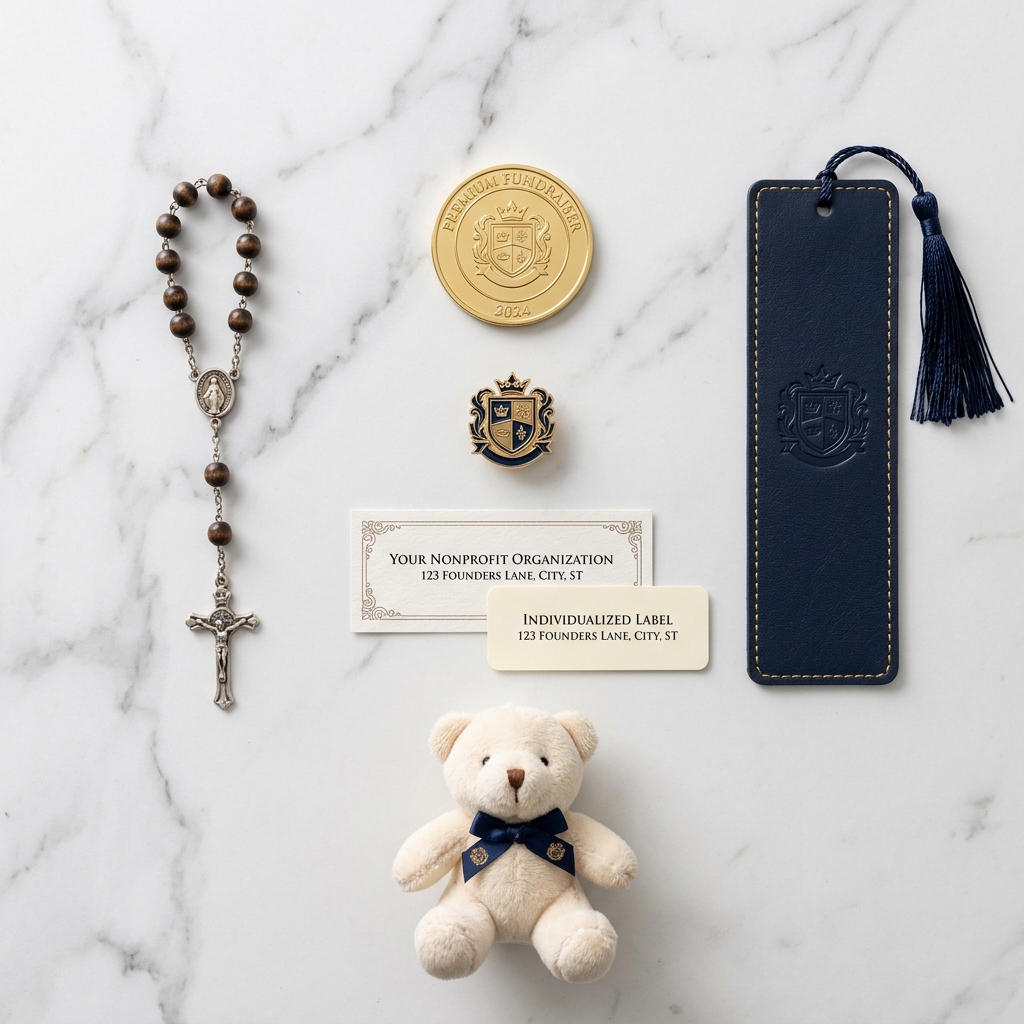
If you've ever received a coin, a set of address labels, a bookmark, or even a small gift in the mail with a donation request—you've experienced a freemium.
In nonprofit direct mail, freemiums are physical items included in a mailing to increase response rates, average gift size, and long-term donor retention.
They are one of the most powerful tools in fundraising—and one of the most misunderstood.
Because the reality is:
It's not whether you use freemiums. It's how strategically you use them.
Why Most Nonprofits Use Freemiums Incorrectly
Many organizations include premiums in their mailings—but fail to see meaningful results.
Why?
Because they:
- Choose items based on cost instead of perceived value
- Select products that don't align with their mission
- Overload mailings with too many items
- Ignore how the premium fits into the donor experience
The result:
- Flat response rates
- Weak donor connection
- Items that get discarded instead of kept
Freemiums don't work when they're treated like giveaways. They work when they're designed as part of a system.
What Are Freemiums in Direct Mail?
A freemium is a tangible, mail-ready item included in a fundraising campaign to increase engagement and giving.
Unlike digital incentives, freemiums are:
- Physical — something donors can hold
- Immediate — delivered right to their door
- Emotionally resonant — tied to mission and meaning
They are designed to capture attention, create connection, and drive action.
Common Types of Freemiums
- Coins and tokens — symbols of belonging and recognition
- Lapel pins — wearable statements of support
- Religious items — rosaries, prayer cards that deepen spiritual connection
- Bookmarks and printed inserts — cost-effective and high-impact
- Keychains and small keepsakes — everyday reminders of mission
- Plush items — emotionally powerful, especially for children's and animal causes
- Tote bags and everyday-use items — long-term brand visibility
Freemiums are used across:
- Acquisition campaigns (new donors)
- Renewal campaigns (repeat donors)
- Retention strategies (long-term value)
Why Freemiums Work: The Psychology Behind Them
Freemiums are effective because they tap into fundamental human behavior.
1. Reciprocity
When someone receives something—even a small gift—they are more likely to give in return. This simple principle consistently increases response rates. Our case studies show response rate lifts of 100% or more.
2. Emotional Connection
Freemiums are not just objects—they are symbols.
- A coin represents belonging
- A rosary represents faith
- A plush represents care and compassion
They connect donors to a mission in a tangible way.
3. Perceived Value
A well-designed premium changes the interaction from:
"I'm being asked for money"
to:
"I'm receiving something meaningful and choosing to give"
That shift increases both response and gift size.
4. Tangibility in a Digital World
Physical items stand out. In a world of digital noise, something you can hold, keep, and revisit creates lasting impact. Research shows that premiums featured in visually dynamic channels can achieve a 50% increase in conversions.
Do Freemiums Actually Increase Donations?
Yes—when used strategically, freemiums consistently improve key fundraising metrics.
Organizations often see:
- Higher response rates — often doubling or more
- Increased average gift size — donors give more when they receive value first
- Stronger donor retention — 20–30% higher year-over-year retention
In our own case studies, campaigns with strategically chosen Freemiums® achieved 188–197% ROI, with revenue nearly tripling compared to non-premium mailings.
But results depend on:
- The type of premium
- Alignment with the mission
- Execution within the mailing
Types of Freemiums (And When to Use Them)
The most effective campaigns match the premium to the objective.
Emotional Freemiums
Examples: plush, religious items, ornaments
Best for: Acquisition and emotionally driven campaigns
Why they work: They create immediate connection and empathy.
Utility Freemiums
Examples: tote bags, apparel, everyday items
Best for: Retention and long-term brand presence
Why they work: They stay in daily use, keeping your organization visible.
Recognition Freemiums
Examples: coins, lapel pins, tokens
Best for: Loyalty and milestone campaigns
Why they work: They signal identity, belonging, and contribution.
Print & Mail Freemiums
Examples: bookmarks, prayer cards, inserts
Best for: Cost-efficient, high-volume campaigns
Why they work: They enhance the experience without increasing mailing costs significantly.
When Freemiums Don't Work
Freemiums are powerful—but only when used correctly.
Common mistakes:
- Poor alignment with the mission
- Low-quality or generic items that feel disposable
- Cluttered mail packages that overwhelm the donor
- Ignoring mailing constraints (weight, size, packaging)
When these happen, premiums feel disposable—and results suffer.
How to Use Freemiums Effectively
To drive results, focus on:
1. Alignment
Choose items that reflect your mission and audience. A faith-based organization should use spiritual items. A children's hospital should use plush toys. The premium should feel like a natural extension of the cause.
2. Simplicity
1–2 strong items outperform complex packages. Don't clutter the envelope—let the premium speak for itself.
3. Mail Readiness
Design for:
- Weight efficiency
- Machine insertion
- Durability
This keeps lettershop costs low while maintaining high perceived value.
4. Emotional + Functional Balance
The best premiums are meaningful, useful, and memorable. They don't just get opened—they get kept.
Freemiums as a Growth Strategy
Freemiums are not just a tactic—they are part of a larger system.
Used correctly, they:
- Improve acquisition efficiency
- Increase donor lifetime value
- Strengthen long-term relationships
They turn one-time donors into ongoing supporters.
The latest trends show that practical, sustainable, and emotionally meaningful premiums are outperforming generic giveaways across the board.
Conclusion
Freemiums remain one of the most effective tools in nonprofit direct mail because they combine psychology, physical experience, and strategic design.
But the difference isn't in using them—it's in using them well.
The right premium doesn't just get opened. It gets kept—and remembered.
Ready to Build a Smarter Campaign?
If you're looking to increase response rates, improve donor retention, or build stronger campaigns:
- Request a Quote — tell us about your goals
- See Case Studies — real data from real campaigns
- Learn How It Works — our end-to-end process